
AI Career Assessment: Discover the Right Career Path for Your Future
Choosing a career is difficult partly because the options are presented in broad categories. “Technology”, “business”, “healthcare” and “creative work” can each contain dozens of very different occupations. A student may know which subjects they perform well in without knowing which kind of work they would tolerate, enjoy or continue to develop over the years. Marks provide one kind of information. They do not describe every ability that matters in a working life.
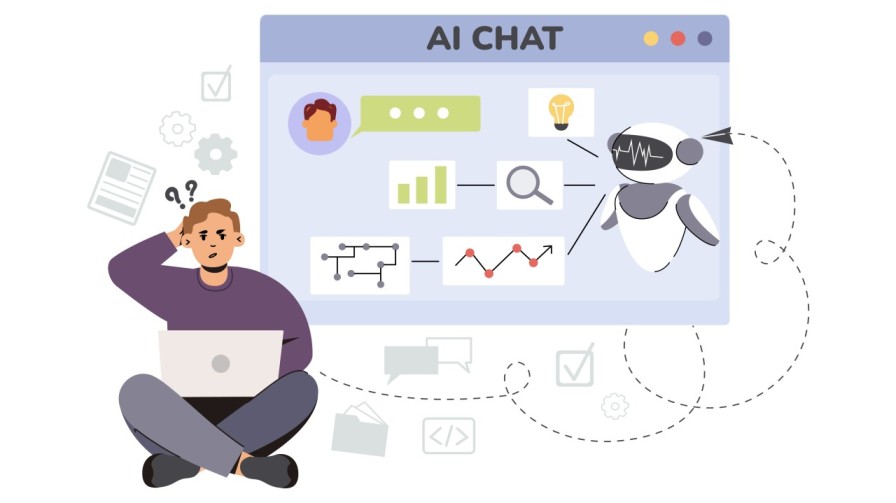
That gap is where an AI career assessment has practical relevance. It can bring together interests, abilities, preferences and other career-related responses that are easy to consider separately but harder to compare at once. The resulting profile may support further investigation, particularly when the individual is undecided or has been considering the same limited group of professions for a long time. It is a point of reference, not a substitute for judgement.
What an AI Career Assessment Can Reveal About Career Direction
1. Interests Are More Specific Than They First Appear
A broad interest rarely identifies a profession on its own. Someone who enjoys mathematics may be interested in financial analysis, statistics, engineering, teaching or operations. A person drawn to technology might prefer working with systems, users, information, security or visual interfaces. The subject is only the starting point.
More detailed questions can expose those differences. What type of activity holds a person’s attention? Are they more interested in examining information, producing something tangible, solving a problem or explaining an idea? When those preferences are considered together, the list of plausible career areas can become more precise.
2. Strengths Extend Beyond Examination Results
Academic marks are useful, but they do not capture the full range of abilities used in employment. Organisation, verbal communication, reasoning, attention to detail, planning and practical problem-solving can influence performance just as strongly in the right setting.
A person may also underestimate an ability because it feels ordinary to them. Someone who naturally arranges complicated tasks, notices inconsistencies quickly or explains difficult information clearly may not regard those behaviours as particular strengths. Career assessment can bring such patterns into view and relate them to occupations where they have genuine value.
3. Working Conditions Can Affect Suitability
A profession can appear attractive until its ordinary routine is examined. The distinction matters. A role may involve constant client contact, extended periods at a desk, frequent travel, strict procedures, independent decision-making or collaborative project work. Personal preference towards those conditions can influence whether the work remains satisfying.
Whenever you are actually planning your early career, you will feel comfortable fixating on titles and degrees while denying the actual workplace. A better practice to select a role is to look past the resume and examine the everyday reality. Watch out for how decisions are made, the freedom you get, the teamwork, how fast things move, and what you are truly responsible for.
4. Familiar Professions Do Not Represent the Entire Market
Students usually encounter a small set of recognised career paths repeatedly. Those professions dominate school discussions, family conversations and general career advice. The result can be a very narrow field of consideration, even when the person’s interests would suit less familiar occupations.
An AI assessment may bring related roles into the discussion that were absent from the original list. That does not make every suggested occupation appropriate. It simply widens the field enough to allow comparison. A new option is worth examining when the underlying work, qualifications and responsibilities correspond with the person’s profile.
5. A Career Also Has An Entry Route
The name of an occupation says little about the preparation behind it. Some fields require a particular academic degree. Others depend on certification, technical training, supervised practice, licensing or a combination of qualifications and experience. The route can also differ between countries and employers.
For that reason, career exploration needs to move beyond preference. Once several areas have been identified, the practical questions become important. How long does the preparation take? Which subjects are required? What does the training cost? Are there alternative routes? Those answers can change how an option is viewed.
6. Existing Experience Still Matters When Changing Careers
A career change does not always begin with a new qualification. In many cases, an individual already has useful experience that can be carried into another role. Project work may have developed planning skills. Customer-facing work may have strengthened communication and conflict handling. Technical work may have built careful analytical habits.
Looking only at the current job title can hide those transferable abilities. If the assessments of interests as well as preferences are broader, this may reveal that the person is not searching for an entirely new professional identity. They may simply be looking for a different application of skills they already possess. For the best guidance, contact MAPIOWN .
7. Assessment Results Can Improve the Quality of Career Discussions
Career conversations often become repetitive when they begin and end with the question of what someone “wants to become”. There may be little evidence behind the answers, particularly for younger students who have had limited exposure to different workplaces.
A detailed assessment gives advisers, teachers and family members something specific to examine. The discussion can move towards particular interests, abilities, work preferences and occupations. Agreement is not necessary for the process to be useful. A suggestion that appears unsuitable can also prompt a useful question about why it was suggested in the first place.
8. It Can Prevent An Early Decision from Becoming An Automatic One
Some career choices happen because a decision simply has to be made. An application deadline approaches, a course is available locally, or everyone around the student assumes one particular path is appropriate. Once the decision has been made, later choices often follow from it without much further examination.
A structured AI career assessment can interrupt that pattern. Its findings can be considered alongside academic records, financial circumstances, location, qualifications and longer-term plans. There may still be uncertainty afterwards, and that is normal. What changes is the basis on which the uncertainty is being handled.
Conclusion
Career planning becomes more useful when it moves beyond a single question about ambition. Interests matter, but so do abilities, working preferences, qualifications, circumstances and the actual demands of the profession. None of these factors should be examined in isolation. An AI career assessment can bring several of them together and provide a clearer starting point for further investigation. For a well-structured digital presence, connect with MAPIOWN.
The result deserves careful scrutiny rather than unquestioned acceptance. Read the suggested occupations closely. Examine the work involved, not just the job title. Check the qualification routes and speak with people who understand the field. A career decision has consequences that a short assessment cannot measure completely. Its findings are therefore best used as evidence within a wider process of research and personal judgement.